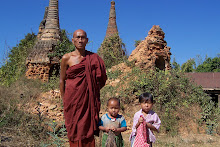
After returning to my room at the White House and hiding the video that I just took I headed to the English class. I saw some familiar faces and some new ones. Monk L arrived about 10 minutes after I did. Just after Monk L arrived a young guy that I never saw before started asking me questions. He asked how I found the class. I told him how I was there in 2005. Then he asked if I was still in contact with anyone from the class in 2005. He knew that I was American and asked if I had ever seen my embassy there. I told him that I had just been by there. He asked if I noticed that there were a lot of soldiers in that area. He told me it was because the UN was in Burma and that "She" lives just down the road from the American Embassy. Then he asked, in front of about 8 other students, if I knew who "She" was. I just acted like I wasn't really sure who he was talking about. Then he said, "Suu Kyi". That was the first time I ever heard any one in the class come out and say her name and this guy was doing it in front of 8 other people. I glanced at Monk L and he sort of gave me a look like don't say anything. But I had been there long enough to know that only a spy, and a pretty bad one at that, would talk so freely in front of other people about such things. It seemed he was trying to bait me into saying something. I still just acted like I wasn't even sure who he was talking about. After class Monk L asked me if I could come to his monastery the next morning. He said he wanted to show me something. I told him I would come, I got the address and went back to the White House.
The next morning, my last full day in Burma, I took a taxi to the monastery. Monk L greeted me at front gate. We took off our shoes and went inside. We sat down on the floor and had some tea. Monk L started talking about the time he was in prison. He told me how his mother wants him to go back to his home town because it was to dangerous for him to be involved in what he continued to call the revolution. He told me that his family asked him not to get involved. Then he said, "But I must." This was the first time that I was getting a sense that there was still a movement alive. He went on to talk about the UN meeting with Aung San Suu Kyi, joking that the U stood for useless. Then he surprised me a little telling me that "they" have a line of communication with Aung San Suu Kyi but that it was very hard getting messages in and out of her house. I hadn't realized during or conversations in the tea houses that he was this involved. I never asked who he meant by "they" instead my mind shifted to my friend Win Win. I asked, "Well then you should know if the girl I met in 2005 is really related to Aung San Suu Kyi?" It seemed he wasn't expecting that question. He just smiled for a few seconds then said, "She is absolutely related to her." Then he told me how he has known her for five years and that I didn't remember him but he was also in the English class in 2005. I asked if he knew if Win Win was OK and where she was. He assured me that he knew she was safe but he didn't know where she was. He said that not to many people know where she is and it's better that way. He told me he would try and get a message to her but it might take some time. Then he pulled out some pictures and told me that this is what he wanted to show me. I was caught off guard. They were pictures from last years cyclone that devastated the delta area in the south of Burma. He told me he had a disk with 2,600 pictures on it from the cyclone. Then he asked me if I would smuggle it out of the country and show the outside world. He told me the Junta didn't want the world to see how bad it was. No reporters were allowed into the cyclone area. The news in Burma played down the story. I remember news reports in America that 200,000 people had died but I hadn't seen anything as bad as what Monk L was showing me on the news. He told me it was more like 500,000 dead in the end. More then half of the people that died died because of the lack of response by the government. There was no warning of the coming storm by the government to it's own people. Most people heard about the cyclone from the BBC or the Voice of America but in the delta most of the people didn't have TVs or even radios. Even now about 8 months later tourist need special permits just to travel through the area. I told L that I would do it. He said he had to make a copy and that he would give it to me at the English class that night. He told me he would leave it in the toilet in the English class, so after I see him come out of the toilet I could go in and get it. It would be on the window ledge. Before I left the monastery I took a couple of pictures of the scars that Monk L got while protesting in 2005. L covered his face with his hand and his robe. I let him see the pictures and told him I would delete them if he thought it was to obvious it was him. He said it was OK. He said, "A lot of us have these." and laughed, referring to the scar.
That afternoon I got to the class around 4. L said he would be there by 4:30 but by 5 he still hadn't arrived. I was starting to get worried that he got caught with the disk while making a copy. At 5:15 Monk L arrived and with in five minutes he went to the toilet. After he came out another guy quickly went in before I could. As soon as the guy came out I went in. I looked on the window ledge but I couldn't see a disk. I felt around a little but nothing. I was a little worried that the guy that got in between us had picked up the disk. I came back out of the toilet and I saw Monk L standing in the back door of the class. I walked toward him and he pulled the disk out from under his robe and handed it to me. I slipped it into my pocket and went back into the class as L slipped out the back door. He came back into the class about 5 minutes later. That day in class there were some older Monks I hadn't seen before. One Monk, Monk D also talked about the protest in 2005. He told me how the students were giving Monks water and the soldiers started beating the students and the Monks. He said then they started shooting. He said, "I didn't think they would shoot us but they started shooting. After the shooting stopped they started picking up bodies dead and some people just wounded and piled them on trucks and drove away."
I wanted to go to a tea house with Monk L after class but first, at the insistence of the teacher, I had to have a farewell dinner. Monk L came along and after the dinner broke up we stopped for a quick cup of tea. I knew it might be the last time I would see him. I would be safe and sound laying by the pool in Thailand in less then 24 hours, as long as I didn't get caught with the disk at the airport, and he would still be there in his dangerous world. Can you imagine standing face to face with soldiers that have loaded machine guns and clubs and you are unarmed in just a robe and sandals? The guy is five foot nothing, maybe 110 lbs, but he has balls the size of watermelons. We shook hands and said goodbye. He told me to be careful and not to get caught with the disk or we would both be in big trouble then he smiled and laughed. I told him to be careful, to take care of himself and then the last thing I said to him was, "Remember that nothing last forever." We parted ways and I went back to the White House. On the way I stopped to buy a boot leg DVD off the street. I bought the Mel Gibson movie "We Were Soldiers". I discarded the DVD and in my room I replaced it with the disk. That night I was talking with a young German couple. They were on my flight and we decided to share a cab to the airport in the morning. We had an 8am flight so I had to get by 5am. I didn't get a very good nights sleep. Every time I heard heavy footsteps come down the hall I would wake up and wonder if I was about to get a knock on my door.
By 5:45am we were on our way to the airport. I just had to get through customs with the disk and the pictures of Monk L's head and also the video of Aung San Suu Kyi's house. I had the disk in the sleeve of the DVD that I bought tucked away in my bag. The video and the pictures were on the same memory card also hidden in my bag. I had a different memory card in my camera. We got to the airport before security was even open. About ten minutes later it opened and I passed through the first security check without any problem. I didn't really feel to nervous. I thought the only way they would find the stuff is if they knew I had it. If they had be watching L and me all along and they knew what we were up to. I gave the guy at customs my passport and a smile. He didn't smile back but with in a half a minute I was through customs. I sat with the Germans while I waited for the flight to board. I thought to myself, that should be pretty much it, I just have to get on the plane and get off the ground and I'm home free. Then I noticed that there was one more security check at the gate. As we lined up for the last check point I asked the German guy, what must have seemed like a very strange question, if he could notify the U.S. Embassy in Bangkok if I get detained there. I think he thought I was joking but that was fine. If I did get stopped he would know it wasn't a joke and hopefully tell my embassy. If I did get stopped I don't think I would have the right to make one phone call. I was told that a French tourist that handed out literature about democracy in front of city hall in Rangoon and got 400 days in prison there without a trial. I made it to the last security check and breezed right through. When the plane lifted off the ground it felt pretty good but it was bitter sweet. I was safe but what about my friends I left behind?
As you can see on the right there are some of the pictures from the disk and the pictures I took of Monk L's head. I contacted CNN, Fox, and the BBC when I got back to Thailand but I still haven't heard from anyone. I didn't really think they would be interested. After all the story has nothing to do with what Paris Hilton or Brittney Spears are up to or how dire things are in America with the economy. It's joke how they throw around words like dire. The pictures to your right are dire. Since returning to Thailand I've received coded emails from inside of Burma. "They", were very disappointed with Madam Secretaries trip to Asia. Especially when she said she would put human rights in China on the back burner because she wanted to talk about more important issues like economics. Can someone explain to me what qualifies her to be Secretary of State? Is it because she was married to a President? Or maybe she is qualified because of all the bullets she dodged when she was visiting Bosnia as First Lady? Please, the only person who ever dodged anything in that family was Bill and that was the draft back in the 60's. Speaking of the 60's, the first day that I viewed the disk I was listening to my Ipod on shuffle and the Bob Dylan song "Blowin in the Wind" came on. Some of the words seem to fit some of the pictures so I cherry picked some. "How many years can some people exist before they are allowed to be free? How many times can a man turn his head and pretend that he just doesn't see? The answer my friend is blowin in the wind."
Friday, February 27, 2009

Wednesday, February 25, 2009
Operation Brunch Part 2, If At First You Don't Succeed...
I returned to Rangoon from Bagan on Sunday afternoon. I was suppose to get to Rangoon around 9am but the bus I took from Bagan broke down and it took three hours to fix it turning a 16 hour bus ride into a 19 hour bus ride. Once in Rangoon I took the local bus from the bus station for 200 Kyats (20 cents) and that to broke down. I had planned to meet up with Andy for breakfast back at The White House. Again he was one day ahead of me but he was leaving that afternoon to go to the coast so by the time I arrived he had already gone. I took it easy Sunday, it takes a day to recover from those long bus odysseys. On Monday I returned to the English class. The small class room was crowded and the electricity was out so it was very hot. The electricity was off half the day in every part of Burma I visited every day I was there. As you walk down the decaying streets of Rangoon you here the constant hum of generators. This in 2009 in a country that has more natural resources then most of the countries on the planet. I was starting to suspect that the government cut the power on purpose just to sell generates, generates that were donated as cyclone relief from the rest of the world last summer. I wouldn't put anything past the military Junta in Burma. I had heard before I came back this time that the Junta was selling supplies to the people that were donated for the cyclone. My friends there confirmed this telling me stories of strange German chocolate they never saw before suddenly on the market. After the English class I went to a tea house with Monk L, the Monk with the huge scar on his head. He spoke more freely without anyone else from the class being around but it still seemed like he was feeling me out. The book I am reading about Burma explains how one in ten people are spies for the government and it even mentions that Monks can be spies. I trusted him more then any other person I talked to on this trip. The battle scar on his head gave him added credibility. Still at this point I wasn't going to tell anyone what I was going to do the next morning.
Tuesday Morning Brunch Part 2
After breakfast at The White House I did a little dry run with the camera I had concealed in my bag. I had made a small hole in the side of my backpack just big enough to stick the lens of my camera through. My bag is black but my camera is silver. I used the same magic marker that I used in Paris to change the street sign to color my lens black. The lens stuck out of the hole about a half inch, once it was black it would be hard to see from across the street or at least I hoped it would be hard to detected. I walked up and down a street near my guest house with the camera recording. I took a look at the video and it seemed that the way the camera was positioned it would show the house but the video did move around a lot. I stopped at St. Marys Catholic Church before I headed for the "Brunch", I thought it couldn't hurt. I did feel a little nervous going back a second time. Everyone knows how much us Catholics revere Mary, especially Irish Catholics. My prodasent friends say we over do it, we put her on a pedestal. Christ you think she was the Mother of God or something. After leaving church I did feel more relaxed. I jumped in a taxi and asked the driver to take me to the university. The university is just up the street from Aung San Suu Kyi's house on the other side of the Korean embassy. So this time I planned to just come down the street one time. I would be on the right side of the street and the house and the check points would be on the left. It would be the same path Andy and I took when we came back down the street when the phone camera slide to far into my bag to see anything. The taxi driver stop at a red light and I realized he was about to turn up the street and pass the house and the check points on the way to the university. I thought he would go around the other way. That looked much easier on the map to me. I sunk down in the seat a little, I didn't want anyone to see me because I'd be walking back down the street in minutes. As the driver past the house he said,"Do you know whose house that is?" I acted like I had no idea. Then he asked if I was American. Which I thought was a strange question just out of the blue. I said I was, I can never deny it no matter what the circumstances, and he told me my embassy was just up the street just before the university. I was surprised because my map showed it down by the river miles from there. I told him he could drop me there and I'll have a look. As we continued up the street, now past the house, it seemed that there were a lot more soldiers and police then there were on the first day I was there with Andy. The driver stopped in front of the U.S. Embassy and I got out of the taxi and into the blazing sun. Across the street from the embassy I could see two policemen with radios. Just up the street on the left side of the embassy there were two soldiers with machine guns and just down the street on the right side of the embassy were two more soldiers with machine guns. The taxi pulled away and I was left standing in front of the U.S. Embassy. I walked up to the gate and was quickly met by two Burmese guards that worked for the U.S. Embassy. I could see signs saying no pictures no video. They asked if they could help me. I told them I was American and I was just checking out the embassy because the taxi driver just pointed it out to me. Mean while my mind was racing. How was I going to get the camera set up and turned on? If I do walk back down the street will the policemen with radios radio ahead to the check points that I was coming? Would I have to abort the "Brunch"? I joked with the guards at the embassy and asked if I was allowed to just walk in and check the place out since it's my embassy. They smiled and said I need an appointment. I could only think of one way to get the camera set up and turned on. The taxi driver had pointed out a little souvenir shop near the Korean embassy. The U.S. Embassy was on the same side of the street as the house, the Korean Embassy and the souvenir shop were on the opposite side of the street. So I crossed the street saying hello to the policemen and walked toward the souvenir shop. I went inside, bought a little souvenir, and asked to use their toilet. In the bathroom I quickly put the camera in place and turned it on. I looked in the mirror to see if the lens was sticking out enough and to make sure it wasn't being blocked by a hanging strap from my bag. I took a deep breath and headed out the door. Once outside I remembered that I wanted to be smoking a cheerot when I walked past the house so I took the bag off, got one out and lit it up. I also had my head phones on but the sound down on my Ipod so I could hear if anyone was yelling at me. I made a right turn and headed toward the Korean embassy. Back off to my left I could see the policemen and the two soldiers on the right side of the U.S. Embassy. It didn't take long to make it to the Korean Embassy. There I past two soldiers, just feet away, behind sand bags with machine guns. They were on my right the camera was in the left side of my bag. I continued past. I could see the first check point across the street on my left. There were also people walking past me on my side of the street. I put my arm down near my side hopefully covering the lens that was sticking out of my bag. I kept walking and I kept puffing my cheerot. I thought if they were looking at me as I past the cheerot might distract them from looking at my bag. I came up on the second check point, one of the inner two check points with the red and white gates that could be lowered to close the road. The house is in between the two inner check points. As I past that check point I noticed a large truck with police written on the side of it up on my right. It was directly across the street from the house. It pulled out and turned right and, to my relief, drove away from me. If I hadn't stopped to light the cheerot I would probably have been right there as they pulled out. With in seconds I was directly across from the house. I tried to take a look with out being to obvious. I was just hoping that my camera was getting a decent shot of the house. It took about another minute to get to third check point, the second gate. I kept walking and past the last check point. Before I got to the corner, where I knew there were more policemen stationed on my side of the street, I stopped at a little shop to buy water. I put the bag down and grabbed some money out. I was able to push the lens of my camera back into my bag and shut off the camera. The video runs for 10 minutes and 46 seconds. It's hard to see everything because the camera is bouncing around a little as I walk. You will also see a lot of my arm. At times I put it front of the camera because I was walking past people on the same side of the street as me. Other times I'm trying to make sure a strap from my bag isn't hanging down in front of the lens. At about 6:38 you can see the first gate at the second check point. At 7:00 you get a quick glimpse of the house If you freeze it at 7:02 you should see the house. At 8:05 you see the third check point, the second gate.
http://www.youtube.com/watch?v=mMlQgKSwZbI
After I bought a bottle of water I walked to the end of the street and made a left. A lake runs a long the street. You can see the back of Aung San Suu Kyi's house from there. I walked past two more soldiers that were stationed next to the lake. I walked about 75 yards past the soldiers and sat on a bench facing the lake. I lit up another cheerot, put the camera lens back through the hole I made in my bag and I took some more video and some still shots of the back of the house. After about 5 minutes I got up and walked down some steps to the main road. There was a bus stop there and I knew that bus 43 was the one that goes back to the middle of Rangoon and stops near the Sula Pagoda, not far from the White House. With in two minutes a bus arrived and I hopped on. It was over crowded and I was the only non-Burmese on board. Fifteen minutes later I was back in the middle of Rangoon.
That afternoon at the English class I found out that Ibrahim Gambari, UN envoy, met with Aung San Suu Kyi the day before and he was in Burma for the week. That explained the extra police and soldiers around her house. The military Junta keeps an extra watchful eye if the UN is in the country. There was even a heavy military presence at the Shwedagon Pagoda that week as well. A lot of the protest, like the one in 2007, and others over the years have started at The Shwedagon. The Junta beefs up security because they are afraid that people might try and protest while the UN is there. I was now down to my last 48 hours in Burma. They would turn out to be the most interesting hours of the trip.
Monday, February 23, 2009
The Rocky Road To Bagan
After five days at Inle Lake I headed to Bagan. The bus was suppose to leave the junction at 5am but it was one hour late. The ride was suppose to be between 10 and 12 hours and Bagan is only about 300 miles away. It was still pitch dark and cold when the bus arrived at 6am. I met a young Austrian couple while I was waiting for the bus. There are never more then a hand full of westerners on the bus so usually you ended up hanging together, eating together at rest stops, sharing information about other places you've already been etc. I had seat 3 in the front of the bus. Seats A and B were the row in front me and seats 1 and 2 were across from me on my right. The door was just in front of seats 1 and 2. This was not a big bus like the one I took from Rangoon, this was a mini bus. When I got on the bus there was already a local girl in seat 4, the window seat, next me. As we started to roll out of the junction the guy in seat 1 closed his window. I had long pants but no long selves and it was cold enough that you could see your breath. Just as the guy closed the window one of the guys working on the bus said something to him in Burmese and the guy slide the window back open. The door was also still open so I was getting hit with a steady flow of cold air. I was thinking it would be at least an hour before sun rise and maybe some warmth from the light. But then about five minutes later I understood why they had left the door and window open. I notice a foot with a flip flop on it dangle down into the open window from the outside, then a hand, then the guy who I guess is in charge of securing the bags on the roof, swung into the open door. Mean while the mini bus is bouncing around on the bumpy road. After the guy was back inside he closed the window and door. Some how I don't think OSHA would approve of this practice. We stopped after about one hour in Kalaw. I joked with the Austrians, "Just 10 more hours to go." Kalaw is in the mountains so it was still cold even though the sun was starting to come up. During breakfast the Austrians brought up Arnold Schwarzenegger. They asked me what I thought of him being Governor of California. It was funny because a Canadian lady asked the same question the day before. I told them I was from the East coast and didn't really give it much thought. I told them that we think the people on the West coast are all a little nuts so it didn't really surprise me. But then I went on to mention that he couldn't be President because he was not born in The United States. Like the Canadian lady they did not know this fact. I wasn't sure how they would react to a joke I went on to tell the Canadian lady a day before but I thought what the hell and told them. "Maybe it's a good thing because the last time an Austrian was the leader of another country it didn't work out to well." They instantly cracked up laughing.
By the time we got back on the bus it was light but it was still cold because of the elevation. It seemed that for the next three hours we were traveling down the mountain. Slowly winding down and down around hair pin turns. The road was still extremely bumpy. The lady in seat B threw up out the window at one point. Out the window I could see a beautiful view of the valley and certain death at the same time. Certain death if our over loaded, old jalopy blew a tire or lost its brakes or if the driver dosed off for a split second. The seats were very small and the girl next to me was all spread out in her seat. The left half of my left ass cheek was hanging off of my seat and every time the bus turned right I had to reach up and grab the bar that hung down from the ceiling so as not to fly into the isle. After five more hours we finally took another break to eat. The Austrians asked if I saw how close we were to the edge when we were coming down the mountain. I told them yes and that at times I thought if the driver took us over the edge he might be doing us all a favor by putting us all out of our misery. By now my left ass cheek was numb. At this point it was getting hot so just before we left the rest stop I changed into shorts. When I pulled my shorts out of my bag my camera came flying out with them and landed in the urinal. I grabbed it right out and luckily every body had peed as soon as we got off the bus so the urinal was pretty dry. Four hours later the girl next to me got off the bus and I finally was able to spread out. For nine hours I had been sitting on the edge of the seat right on the metal bar with really no padding. The last two hours were a piece of cake, hell I could have gone five more hours now that half my ass wasn't numb. We got to Bagan just after 5pm. I didn't have any place booked to stay so I picked one out of my lonely planet guide. At the bus station there were plenty of people asking if you needed a place to stay or if you needed a taxi or horse cart. Yes horse cart. I knew my place was near but after that ride I didn't feel like walking around looking for it so I asked the horse cart driver how much to my guest house. He told me 500 Kyats (50 cents) so I hopped in. The Austrians decided to walk. The cart drove me about 50 yards down the street and made a left. The Austrians were walking close behind. After the left turn the cart took me another 50 yards to my guest house. But when the cart made the left turned we got caught up in traffic for about 18 seconds so when I got to the guest house I found two grinning Austrians waiting for me. I took a room but they ended up going to another place. I went out for dinner and ran into them again so we ate together.
DEJA VU ALL OVER AGAIN
The next morning I got up early and rented a bike for the day for $1.50. I was planning to peddle around and see some of the temples of Bagan, there are over 4,000. I picked a bike and was paying for it at the front desk when Andy the English guy I met in Rangoon comes walking out. He had left one day ahead of me from Rangoon traveled to Inle Lake then onto Mandalay then down to Bagan. He had also arrived in Bagan the day before but in the morning. He was also planning to rent a bike and check out the temples. He got his bike all sorted out then before we set out we went back to our rooms to go to the toilet. Again we were both on the bottom floor directly across from each other, my room on the right side and his on the left just like we were back in Rangoon in the White House. We spent the day checking out some of the major temples. Then come in all shapes and sizes. Most of the temples date back about 1,000 years. Some are huge and spectacular. At the end of the day when went to one of the bigger temples that the Lonely Planet recommends for sunset. When you look out on the horizon the landscape is dotted with what seems like endless temples. It was a pretty incredible site as the sun sank. I turned to Andy and said, "Isn't it amazing that they could build over 4,000 all inspiring temples over 1,000 years ago but they can't build 1 decent road today in this whole country?"
Thursday, February 12, 2009
Burma Part 4 Meet Jue Jue Maw and the Jumping Cats
After lunch Wa Na drove me to the junction and from there I got a local taxi (a guy on a moped) to Nyaungshwe, a small town on Inlay Lake. I pick a place called The Four Sisters guest house out of my Lonely Planet guide because it was the only place in my book that mentioned hot water. The room was big with wood floors and bamboo walls. I had my own bathroom and there was hot water. The room cost $7 a night and included breakfast. I paid for three nights when I checked in. But at dinner one of the Four Sisters (The guest house is actually owned by four sisters) told me that there weren't many tourist around so they were giving me a dollar a day discount to thank me for picking their place and she tried to give me $3 back. I felt bad. If they were already slow I didn't want take money back. So the sister, the youngest of the four, asked if it was OK if they donated the $3 to the orphanage they were involved with. I told them sure and that I wanted to know more about the orphanage. The orphanage was started by a local man, U Tet Tun but in 2003 a Dutch guy, who has since passed away, got involved and set up a foundation where people can donate over the Internet. The next morning I rented a bike, for $1 a day and peddled to the orphanage to see for myself. The Four sisters told me it was only 30 minutes away but it was more like an hour. The orphanage has 50 young girls. It provides them with an education, housing, and medical care although the medical care is limited because it's hard for them to get medicine that we all take for granted. I met the lady who was now one of the people in charge. I told her I was interested in signing up through the foundation to sponsor one of the girls. It only cost 10 Euro a month ($13 U.S.). I was introduced to a polite young girl named Jue Jue Maw. She told me her ambition was to be a teacher, her hobby was reading, and her favorite subject is English. They made me some Shan noodles for lunch and I had a chance to meet some of the other orphans. Before I peddled back I gave a donation and about 70 pills, an anti-biotic that I'm suppose to take daily in case I'm bit by a mosquito that carries malaria. I still had a lot more pills in Thailand that I don't think I will end up using. Their website is www.myanmar.inlelake.info but as of this morning it's not working. When I was at The Four Sister another Dutch guy involved with the orphanage was visiting. He told me to try the site in about a month because it was being rebuilt.
The next morning I woke early and had breakfast at 7am. I ate out on the veranda and at that time of the morning you could still see your breath. It is winter in Burma and up in the Shan State it can get cool at night. I had arranged a day trip on the lake. It was $15 for the whole day. I had no long sleeves with me and it was still pretty cool so the youngest of the four sisters told me to take a blanket from my room with me. After breakfast I went downstairs and my guide Tin Tin Moe was waiting for me. I grabbed a blanket and got on his traditional long boat that he had docked across the street on the canal. We headed down the narrow canal then out onto Inlay Lake (Sometimes spelled Inle). First we saw fisherman that have a unique way of paddling their traditional boats. They paddle with their leg. I'm glad I have it on video because it's to hard to explain. Our first stop was at a small market in a floating village. There The Pa Dong "The Long Neck People" one of Burma's indigenous hill tribes sell their wares to curious tourist. From there we continued south then in land up a small channel to a bigger market and after a 15 minute hike into the foot of the mountains to some ancient pagodas. At this point the brisk morning air had given way to the blistering Burmese sun. It is winter in Burma but the sun is still the most intense I've felt anywhere on the planet. Through out the day I saw many interesting things, a place where they make Cheerots (A cigar Burmese style), a blacksmith where they were making some amazing swords, a floating garden (more like a floating farm) where locals grew tomatoes and cabbage on the lake. But the last place I visited took the cake. I had read about a monastery on the lake where Buddhist monks had trained cats to jump through hoops. It's one of those things you have to see to believe. So here it is;
http://www.youtube.com/watch?v=klH1_V_8vYA
Blacksmith video. Remember they earn about $1 a day
http://www.youtube.com/watch?v=Ww6vxIw-B-0
Leg Paddling
http://www.youtube.com/watch?v=oZhybPmd3vI
Pagodas on Inlay Lake
http://www.youtube.com/watch?v=zESNOu8d8pw
Burma Part 3 More Questions Then Answers
After our failed attempt to video Aung San Sui Kyi house Andy and I went to the English class. We were welcomed in by the teacher and lead to opposite sides of the class. We were both surrounded by eager students that wanted to practice their English. For the second straight day students that could ask about anything from music or movies in the Western world asked me what I thought about the incoming U.S. President. I didn't want to talk to much about politics in front of to many people. I didn't want another visit from the military intelligence especially when I was still trying to track down my old friends. But I couldn't help myself. In a way it was good that I can't stand our new leader because it gave me a chance to talk about democracy. I would say how I thought it was a big mistake for my country but then I would always go onto say that he won and now I have to live with it for hopefully only 4 years. Before long I was talking with a small group not about who or who wasn't the next U.S. President but talking about basic human rights like freedom of speech. A concept that is unheard of in Burma. Just last August a handful of protesters held signs up that were anti-government in Rangoon. They were arrested, and without a trial, they were sentenced to five years in prison. Knowing this I was amazed by some of the things people would say when you could see they felt safe. A young girl spoke up and said, "We don't have a chance here because of our government. It is the longest government in the world." I said, "Since 1962." Just to let her know that I know about her government. I told her that I would like to talk about it but I know it is dangerous for her. She answered simply, "Spies." as she scanned the room. Then I noticed a guy come into the class that looked familiar. He was in the class in 2005. I asked if he remembered me and he said yes and sat down next to me. The students would keep changing seats so that all had a chance to talk to a native English speaker. After a few minutes of talking with him I pulled my note book out wrote down the name of the girl I was looking for and asked if he remembered her. He didn't hesitated, "Yes I remember her." Finally I found someone who new her. I asked if he knew is she was OK. And he said she was. Finally after 16 months I was able to at least find out that one of my friends was OK and still alive. I pulled out the picture I had of her as I asked if he knew where she was and as soon as he looked at the picture he said, "Oh no that's not the girl I was thinking of." Now in an instant I was back to square one and I still had no idea if my friend was OK. The guy assured me he would ask around for me then he left the class. A pretty young girl that was sitting on the other side of the room now took the open spot next to me. She spoke for a little then asked if I would take her email. A lot of the students gave me their emails and asked if I would keep in touch. She wrote the email in my book and I wrote mine in hers. Then she said, "So your name is Don." and I said yes. Then she pointed to the end of her email to her name T.T.M. and said, "This is my name." My friend Win Win had sent me a friends email that she said I should use every time I email her. If she didn't get my email and her friend did her friend would pass on the message. I never met this friend but I remembered her name was T.T.M. and all three names were spelled exactly the same way. I couldn't believe it. I said, "You know my friend Win Win (and said Win Win's third name)." And she said, "No I don't know her." Then I wrote the name down and showed her. Still the answer was no. Then I showed her Win Wins picture but she still insisted that she didn't know my friend. At this point I was waiting to hear a cock crow. The class wrapped up soon after. The teacher left early so I still hadn't had a chance to ask him if he remembered his former student. After class Andy and I went to a tea house with a Monk (I'll call him "L") and another male student. There wasn't much political talk this time. When the bill came Andy and I split it although Monk L objected. Their half of the bill was about 30 cents. Then Andy said to Monk L, "Don't worry about it. You can buy me a beer sometime." I couldn't resist and chimed in with, "A Monk walks into a bar." For the moment we were just 4 guys sitting around shooting the shit which was nice after the long day of spying and talking about politics. When we got outside there was a few seconds that me and Monk L were alone and I asked him what I've been wanting to ask him all day, "How did you get that scar on your head." referring to the huge scar that ran across his scalp and part way down his far head. He answered proudly, "I got that in the revolution. He was the second Monk that refereed to the protest of September 2007 as "The Revolution." I told him that that is what I suspected but didn't want to ask. That night Andy and I sat around upstairs in the White House and digested the day. After thinking more about class that day I started to wonder if people did know my friend Win Win. After all if she really was who she said she was it might be dangerous to admit you knew her let a lone where she was if she was in hiding. In Burma its hard to tell who is who and what is what. The next morning Andy headed North I spent one more fruitless day in Rangoon then I was right behind him heading for Inlay Lake.
Thursday morning I took the local bus to the the main bus station that is about 30 minutes out of town. The bus cost 200 Kyats (About 20 U.S. cents) a taxi cost 7,000 Kyats. I made it to the main bus station with time to spare. As I waited a young Burmese guy started talking to to me. He told me if I needed to translate anything while on the bus to let him know. The bus stopped for food after about an hour which seemed odd because the journey was suppose to take about 16 hours to travel just over 400 miles. That's not a miss print, 16 hours to go a little more then 400 miles. The road is one lane and at times full of pot holes. I don't think we ever exceeded 30 miles an hour. The bus has to keep pulling over half on the road half off to make way for traffic coming in the other direction. On the way up I noticed truck after truck carrying huge teak logs. I also saw a familiar site from the last time I used a bus in Burma in 2005, slave labor working on the roads. As the bus slowly passes the road crews you get a good look at their faces, 10 year old boys, 12 year old girls, 50 year old women all carrying buckets or trays of small rocks. The bus stopped for food and for people to use the bathroom (no bathrooms on board) at least every 5 hours. Each time I would talk more with Wa Na, the young guy I met at the beginning of the trip. We made one last stop in Kalaw about 3am. Wa Na realized that when we got to the junction where I needed to get off the bus to then get a local taxi (a guy on a moped) to Nyaungshwe that no one would be there because it was the middle of the night. He told me I could go all the way to Taunggyi (The main town in the area) and I could sleep at his house in a near by village. In a lot of places in the world I wouldn't consider it for a second but this is Burma and although the government is amongst the worst in the world the people are amongst the best. I have to say that I think the Burmese have surpassed the Irish as the nicest people I've ever met anywhere in the world. I was more afraid for him and his family because it is illegal to have foreigners stay at you place without a permit. I told Wa Na this but he assured me it was no problem so I took him up on his offer and before I knew it, after a local taxi ride that Wa Na insisted on paying, I was walking down a dirt road in the pitch dark in the tiny village of Aye Thar Yer with a guy I met 16 hours ago. When we got to the house it was about 4am, dogs started barking and flash lights (not normal lights, the power was out) went on. Wa Na yelled something in Burmese and someone yelled back. His whole family came out and welcomed us into the house. They gave me his bedroom and after the grueling journey I was fast asleep. I woke up at 8am to the sound of a foreign language being spoken and the view of mountains outside my window. It took a good minute to figure out where I was. I couldn't for a few moments even remember what country I was in. When I came out of the bedroom I met the family again but this time in daylight. Wa Na was the only one that spoke English and he explained to me that they usually eat fried rice for breakfast but his parents wanted to take me out for breakfast. So we went through the small dirt streets cutting through the local market, as people stared at me all the while, until we reached a little tea house where we ate. Again I was not allowed to pay even my part of the meal. After breakfast Wa Na informed me that his family wanted me to stay for lunch if I had time. I said sure. We went back to the house then Wa Na asked if I wanted to see the school he went to when he was young. We got on a motorbike and headed for the school that his Nice's now attend. On the way he happened to mention that his Father (67) was retired. I asked what his job was and he said that he worked for the government. I asked what did he do for the government and he told me that his Father was in the military. Burma gets stranger by the minute. One day I'm sitting with Monks that were beat and imprisoned by the military and the next day I'm sleeping and eating at a house where the Father was ex-military. No wonder it was no problem if I stayed at their house even without a permit. We had lunch the traditional Burmese way. Wa Na, his Father, and I were served by Wa Na's Mother and Sisters. The oldest is served first. After the men are finished eating and the plates have been cleared the ladies eat together down stairs. The Father seemed so nice and the family treated me like I was family but I couldn't help wonder how many people this guy has oppressed? Has he helped raid villages? Has he killed innocent people? Or is he just a man that above all things is just taking care of his own family. But is that a legitimate excuse? A lot of Nazi's could have said the same thing back in the 30's and 40's. Hitler could have never done all the things he did with out the indifference of good me.
Thursday morning I took the local bus to the the main bus station that is about 30 minutes out of town. The bus cost 200 Kyats (About 20 U.S. cents) a taxi cost 7,000 Kyats. I made it to the main bus station with time to spare. As I waited a young Burmese guy started talking to to me. He told me if I needed to translate anything while on the bus to let him know. The bus stopped for food after about an hour which seemed odd because the journey was suppose to take about 16 hours to travel just over 400 miles. That's not a miss print, 16 hours to go a little more then 400 miles. The road is one lane and at times full of pot holes. I don't think we ever exceeded 30 miles an hour. The bus has to keep pulling over half on the road half off to make way for traffic coming in the other direction. On the way up I noticed truck after truck carrying huge teak logs. I also saw a familiar site from the last time I used a bus in Burma in 2005, slave labor working on the roads. As the bus slowly passes the road crews you get a good look at their faces, 10 year old boys, 12 year old girls, 50 year old women all carrying buckets or trays of small rocks. The bus stopped for food and for people to use the bathroom (no bathrooms on board) at least every 5 hours. Each time I would talk more with Wa Na, the young guy I met at the beginning of the trip. We made one last stop in Kalaw about 3am. Wa Na realized that when we got to the junction where I needed to get off the bus to then get a local taxi (a guy on a moped) to Nyaungshwe that no one would be there because it was the middle of the night. He told me I could go all the way to Taunggyi (The main town in the area) and I could sleep at his house in a near by village. In a lot of places in the world I wouldn't consider it for a second but this is Burma and although the government is amongst the worst in the world the people are amongst the best. I have to say that I think the Burmese have surpassed the Irish as the nicest people I've ever met anywhere in the world. I was more afraid for him and his family because it is illegal to have foreigners stay at you place without a permit. I told Wa Na this but he assured me it was no problem so I took him up on his offer and before I knew it, after a local taxi ride that Wa Na insisted on paying, I was walking down a dirt road in the pitch dark in the tiny village of Aye Thar Yer with a guy I met 16 hours ago. When we got to the house it was about 4am, dogs started barking and flash lights (not normal lights, the power was out) went on. Wa Na yelled something in Burmese and someone yelled back. His whole family came out and welcomed us into the house. They gave me his bedroom and after the grueling journey I was fast asleep. I woke up at 8am to the sound of a foreign language being spoken and the view of mountains outside my window. It took a good minute to figure out where I was. I couldn't for a few moments even remember what country I was in. When I came out of the bedroom I met the family again but this time in daylight. Wa Na was the only one that spoke English and he explained to me that they usually eat fried rice for breakfast but his parents wanted to take me out for breakfast. So we went through the small dirt streets cutting through the local market, as people stared at me all the while, until we reached a little tea house where we ate. Again I was not allowed to pay even my part of the meal. After breakfast Wa Na informed me that his family wanted me to stay for lunch if I had time. I said sure. We went back to the house then Wa Na asked if I wanted to see the school he went to when he was young. We got on a motorbike and headed for the school that his Nice's now attend. On the way he happened to mention that his Father (67) was retired. I asked what his job was and he said that he worked for the government. I asked what did he do for the government and he told me that his Father was in the military. Burma gets stranger by the minute. One day I'm sitting with Monks that were beat and imprisoned by the military and the next day I'm sleeping and eating at a house where the Father was ex-military. No wonder it was no problem if I stayed at their house even without a permit. We had lunch the traditional Burmese way. Wa Na, his Father, and I were served by Wa Na's Mother and Sisters. The oldest is served first. After the men are finished eating and the plates have been cleared the ladies eat together down stairs. The Father seemed so nice and the family treated me like I was family but I couldn't help wonder how many people this guy has oppressed? Has he helped raid villages? Has he killed innocent people? Or is he just a man that above all things is just taking care of his own family. But is that a legitimate excuse? A lot of Nazi's could have said the same thing back in the 30's and 40's. Hitler could have never done all the things he did with out the indifference of good me.
Monday, February 9, 2009
Burma part 2 "Operation Brunch"
Andy and I met at breakfast in The White House and went over the details of our plan to go see Aung San Sui Kyi house. She has been, and is currently, under house arrest there. She has been under house arrest for the better part of the past 18 years. My Lonely Planet guide shows her house on a map. Andy's guide is older and has the same map but without her house on it. So we planned to leave my book behind in case we were stopped and searched. I noticed on the map that the Korean Embassy was just down the street from Aung San Sui Kyi's house so I figured that could be our excuse for walking by, if the road was even open. We took a taxi to a local tea house listed in Andy's book that was just around the corner from the house. We planned to just have some tea since we just had breakfast but Andy's book is five years old and now there is a nice Chinese restaurant at that location. So we had to eat as we went over the details of our plan one last time. It was hard to talk because the waiter stood by the table the whole time. Every time I took a sip of tea he would hurry over and top off my cup. We both thought it would be interesting to just walk down the street and see the house but since we are there anyway why not try and get some video or a picture? According to my guide it's against the law to photograph anything deemed sensitive in Burma. The guide listed the following, anyone in uniform, train stations, police stations, bus stations, etc, etc. It didn't mention Aung San Sui Kyi house but I'm pretty sure that goes without saying. Andy fixed my phone so it wouldn't make a sound when you snap a picture and adjusted it to the maximum recording time, 2 minutes and 40 seconds. The bill came to 9,000 Kyats (about $9) and that include a pack of cigarettes that Andy bought. We gave the waiter 10,000 and told him to keep the change. He seemed very happy. Andy went to the bathroom and I played with the camera while I waited my turn to go. Andy came back and told me the waiter was going to follow me into the bathroom. I thought he was joking but sure enough he did. First he opened the door for me then he waited inside the bathroom smiling. He almost gave me stage fright but I managed to go. Then he turned the water on for me, squirted the soap into my hands, then handed me a towel. You would think the tip was $1,000 not 1,000 Kyats.
We left the restaurant taking the receipt with us in case we were questioned we would have proof we were just eating near by before going to the Korean Embassy "To see about Visa's for Korea". We walked toward the street, University Avenue, according to the map it would be our next left. Andy asked me if I was nervous and I told him not really. I asked him the same thing and he gave me the same answer. We could see the street now and a police post on the corner on the left side of the street. The house according to the map should be in the middle of the block on the right side as we venture down. Just past the street there is a big lake so we continued past the street and walked along the lake. The house is between the street and the lake. As we walked along the lake Andy asked me if I knew what the house looked like. I told him that I've seen a picture in the book I'm reading now. I told him, without pointing, that it looked like the grayish one but I thought according to the map it would be further down the street. We walked back toward the mouth of the street. We planned to go down the street, pass the house, go to the Korean Embassy first, then on the way back we would try to get a shot or video. We turned the corner and got on the left side of the street, the opposite side as the house. As soon as we turned the corner we could see two soldiers on the right side of the street in a little guard house. They seemed to notice us coming toward them on the opposite side of the street. So I said to Andy, "You know what, we should cross the street and go straight up to them, show them your map and ask if they know where the Korea Embassy is." A tactic Michal Collins would employ while he was the most wanted man in Europe. He would go straight up to soldiers and ask them to light his cigarette. It goes against conventional human nature and that is why it works. I must say, Andy was as cool as a cucumber as he pulled his map out and asked for directions. There is something strange about walking up to two soldiers with high power weapons and treating them like they were from the tourist board. The older solider didn't seem to happy or interested and turned away with a displeased look on his face. But the younger of the two was all smiles. He looked at the map and as Andy asked if we were heading the right way and pointed down the street he pointed the same way and smiled and nodded yes. We thanked him and went back to the other side of the street and continued on. We mumbled to each other. Now if they stopped us that soldier pointed us this way. About 30 meters down the street on the same side as the first check point was another. This check point had a red and white gate that was up put could be lowered to stop traffic. We kept walking just glancing at the other side of the street. Then suddenly Andy said, "Look that is razor wire." To the left of the second check point was what I would call bobbed wire and it ran about 30 more meters to a third check point that also had a red and white gate that was in the up position. It was now obvious that the grayish house we could see from the lake was Aung San Sui Kyi house and without saying it to each other we both knew. We kept walking trying to look straight ahead but also glancing at the house. We were now across the street maybe just 50 meters from the house. Somewhere inside was the 1991 Nobel Peace Prize Winner. We past the third check point and a fourth then just up on the left around a little bend was the Korean Embassy. Just outside were some more soldiers with machine guns behind some sand bags. When we got to the gate two Burmese guards with Korean flags on their sleeves came out and asked what we wanted. We told them we just wanted to find out if we needed visa's to enter Korea. They let us inside of the gate. We signed in, again giving us proof we were there for legitimate reasons in case we were stopped on the way back down the street. We were there less then 5 minutes. We walked back the same way we came. Now we just had to get the camera turned on and put it in the back pocket of my backpack. I have a small pocket on the back of my backpack that isn't very deep. If you put the phone in vertically the lens of the camera sits just outside the pocket. We only had 2 minutes and 40 seconds of video and we didn't want the video to run out before we made it to the house. We walked back up the street and when we got the the bend just before what would be the first check point we were in a blind spot between the soldiers outside the Korean Embassy and the first check point. We stopped there I put my bag on the ground, took a bottle of water out and took a drink. At the same time I had grabbed my phone. I turned on the camera, slipped it in the back pocket of my bag and we started walking toward the first check point. As we passed the first check point I heard a whistle. I asked Andy if he heard it. He said he did but we both kept walking without looking back. We reached the second check point and were quickly between the second and third check points between the two gates. I glanced across the street and I noticed a solider on the other side of the bobbed wire peering through a iron gate just to the left of the front of the house. He wasn't there on our first trip by. We were almost exactly across the street from the house and I said to Andy that I needed to point the camera across the street. Immediately as if on cue Andy stopped and acted like he was fixing his shoe. I stopped and turned so my back and the camera were facing the house. He stood back up and we walked past the fourth check point, the check point where we had stopped and asked for directions. After we were past the last check point I looked back across the street and gave the solider that helped us a wave. He still had a big smile on his face and he nodded his head. There was just the police on the street corner at the very end of the road to contend with now. They were on the same side of the street on our right. As we passed I just slide my bag to my left and pushed the camera down into the pocket. We walked a few blocks then jumped into a cab and made our getaway. In hindsight stopping at the first check point and asking for directions may have helped us if we were stopped, as long as they didn't find the camera. But The guys in the forth check point didn't know that we even stopped to talk to the guys in the first check point so when they saw us pass them then less then 10 minutes later saw us pass them again they were probably suspicious. And we think they blew the whistle to alert the next check point and also the guy behind the gate. I got the first look at the video that night in the safety of my room and I couldn't believe my eyes. The video starts with a nice clear picture then with in twenty seconds it slides just low enough into the pocket so that you can't tell what street you are walking down. We had planned everything to a T but never did a dry run with the camera. We still did get to walk down the street and see the house but it would have been nice to have it on video. I guess we need to go back to spy school.
We left the restaurant taking the receipt with us in case we were questioned we would have proof we were just eating near by before going to the Korean Embassy "To see about Visa's for Korea". We walked toward the street, University Avenue, according to the map it would be our next left. Andy asked me if I was nervous and I told him not really. I asked him the same thing and he gave me the same answer. We could see the street now and a police post on the corner on the left side of the street. The house according to the map should be in the middle of the block on the right side as we venture down. Just past the street there is a big lake so we continued past the street and walked along the lake. The house is between the street and the lake. As we walked along the lake Andy asked me if I knew what the house looked like. I told him that I've seen a picture in the book I'm reading now. I told him, without pointing, that it looked like the grayish one but I thought according to the map it would be further down the street. We walked back toward the mouth of the street. We planned to go down the street, pass the house, go to the Korean Embassy first, then on the way back we would try to get a shot or video. We turned the corner and got on the left side of the street, the opposite side as the house. As soon as we turned the corner we could see two soldiers on the right side of the street in a little guard house. They seemed to notice us coming toward them on the opposite side of the street. So I said to Andy, "You know what, we should cross the street and go straight up to them, show them your map and ask if they know where the Korea Embassy is." A tactic Michal Collins would employ while he was the most wanted man in Europe. He would go straight up to soldiers and ask them to light his cigarette. It goes against conventional human nature and that is why it works. I must say, Andy was as cool as a cucumber as he pulled his map out and asked for directions. There is something strange about walking up to two soldiers with high power weapons and treating them like they were from the tourist board. The older solider didn't seem to happy or interested and turned away with a displeased look on his face. But the younger of the two was all smiles. He looked at the map and as Andy asked if we were heading the right way and pointed down the street he pointed the same way and smiled and nodded yes. We thanked him and went back to the other side of the street and continued on. We mumbled to each other. Now if they stopped us that soldier pointed us this way. About 30 meters down the street on the same side as the first check point was another. This check point had a red and white gate that was up put could be lowered to stop traffic. We kept walking just glancing at the other side of the street. Then suddenly Andy said, "Look that is razor wire." To the left of the second check point was what I would call bobbed wire and it ran about 30 more meters to a third check point that also had a red and white gate that was in the up position. It was now obvious that the grayish house we could see from the lake was Aung San Sui Kyi house and without saying it to each other we both knew. We kept walking trying to look straight ahead but also glancing at the house. We were now across the street maybe just 50 meters from the house. Somewhere inside was the 1991 Nobel Peace Prize Winner. We past the third check point and a fourth then just up on the left around a little bend was the Korean Embassy. Just outside were some more soldiers with machine guns behind some sand bags. When we got to the gate two Burmese guards with Korean flags on their sleeves came out and asked what we wanted. We told them we just wanted to find out if we needed visa's to enter Korea. They let us inside of the gate. We signed in, again giving us proof we were there for legitimate reasons in case we were stopped on the way back down the street. We were there less then 5 minutes. We walked back the same way we came. Now we just had to get the camera turned on and put it in the back pocket of my backpack. I have a small pocket on the back of my backpack that isn't very deep. If you put the phone in vertically the lens of the camera sits just outside the pocket. We only had 2 minutes and 40 seconds of video and we didn't want the video to run out before we made it to the house. We walked back up the street and when we got the the bend just before what would be the first check point we were in a blind spot between the soldiers outside the Korean Embassy and the first check point. We stopped there I put my bag on the ground, took a bottle of water out and took a drink. At the same time I had grabbed my phone. I turned on the camera, slipped it in the back pocket of my bag and we started walking toward the first check point. As we passed the first check point I heard a whistle. I asked Andy if he heard it. He said he did but we both kept walking without looking back. We reached the second check point and were quickly between the second and third check points between the two gates. I glanced across the street and I noticed a solider on the other side of the bobbed wire peering through a iron gate just to the left of the front of the house. He wasn't there on our first trip by. We were almost exactly across the street from the house and I said to Andy that I needed to point the camera across the street. Immediately as if on cue Andy stopped and acted like he was fixing his shoe. I stopped and turned so my back and the camera were facing the house. He stood back up and we walked past the fourth check point, the check point where we had stopped and asked for directions. After we were past the last check point I looked back across the street and gave the solider that helped us a wave. He still had a big smile on his face and he nodded his head. There was just the police on the street corner at the very end of the road to contend with now. They were on the same side of the street on our right. As we passed I just slide my bag to my left and pushed the camera down into the pocket. We walked a few blocks then jumped into a cab and made our getaway. In hindsight stopping at the first check point and asking for directions may have helped us if we were stopped, as long as they didn't find the camera. But The guys in the forth check point didn't know that we even stopped to talk to the guys in the first check point so when they saw us pass them then less then 10 minutes later saw us pass them again they were probably suspicious. And we think they blew the whistle to alert the next check point and also the guy behind the gate. I got the first look at the video that night in the safety of my room and I couldn't believe my eyes. The video starts with a nice clear picture then with in twenty seconds it slides just low enough into the pocket so that you can't tell what street you are walking down. We had planned everything to a T but never did a dry run with the camera. We still did get to walk down the street and see the house but it would have been nice to have it on video. I guess we need to go back to spy school.
Saturday, February 7, 2009
Burma 2009 Part 1 Rangoon
I landed at Yangon Airport (Rangoon) early Sunday morning. I brought a head cold with me from Thailand so it felt like my head was going to explode as we came into land. Old beat up buses were waiting for the passengers as we disembarked from the plane. But when we got to the terminal I was surprised to see a new wing of the airport. When I was there in 2005 the airport looked like something from the 1940's. I only brought my smaller bag with me (I left the other one in the condo in Thailand) so once I cleared customs I was out of the airport and looking for a cab. As soon as I walked out of the brand spanking new terminal I saw the Rangoon I remembered. The sidewalk was stained with brown blotches a bi-product of all the Betel Nut being chewed by locals. Betel Nut is suppose give you a rush or make you more alert when you chew it. I don't know about that but I can tell you it defiantly gives you brown teeth. I got a cab to The White House, a guest house I stayed in in 2005 and took the cheapest room they had, $6 a night and that included breakfast. The room had two single beds in it and the beds were the same length of the room. So the head and the foot of the bed both were touching a wall. In between the beds there was a small table with a fan. Bathrooms and showers were down the hall. I booked 4 nights, I planned to spend my days in Rangoon looking for my friends that I met back in 2005. I still had a business card from the English class where I met my friends in 2005 so I was planning to start there first and see if it was still open. If the school was still there it wouldn't be open because it was Sunday. So I spent part of the day just walking around the city. Most things seemed the same, the decaying sidewalks that look like they were hit by an earthquake, people selling everything you can think of lining the main streets, but some things seemed different. I noticed more Internet cafes, more little restaurants where people were watching live English Football via satellite. On the other hand it seemed like less of a military presence and the thing that seemed to be missing most were the monks. There were some but in 2005 I saw about 30 times more monks in the city. I wasn't sure what things would be like in Burma now. Since I was there in 2005 there was the brutal crack down on peaceful protests in September 2007 where 90 people (mostly monks) were killed and Cyclone Nargis last summer that killed 200,000 people.
Monday day 2
Monday morning at breakfast I met Andy, a young traveler from York England. He arrived on the same flight as me from Bangkok. We ended up talking for more then 2 hours. Andy seemed very interested in Burma. Not just the temples and other things to see there but the political situation. When he heard my story from 2005 he seemed fascinated. He told me he was thinking about going to see Aung San Sui Kyi house and I told him I was thinking the same thing. It was now afternoon and I had to get going. We planned to meet that afternoon at Shwedagon Pagoda and talk more about going to see "The Lady's" house. We both went back to our rooms and it turned out that Andy was in the room just across the hall from me.
I set out in search of the English class. The business card had the address on it but Rangoon doesn't have very good street signs. I sort of remembered where it was and with a little help from some locals I found the address, but the class was no longer there. The card I had for the school had a picture of the teacher on it and one of the guys in a store next to where the school use to be recognised him. He told me the class had moved a few blocks down on the same street. I went searching and again with help from some locals I found it, or so I thought. The name of the school was UMA English School. There was a sign for UMA but it wasn't an English class. But a man in that UMA said he knew where the UMA I was looking for was and he told me that two young girls, maybe 12 years old, in his store would show me the way. They were walking, through the crowded streets of Rangoon, about ten feet in front of me looking back every minute or so and smiling at me. They walked me about five blocks and this time I was in the right place. I tried to give them 2,000 Kyats (about $2 U.S.) as a tip and they just smiled and shook their heads no as they walked away. Sixty five percent of people in Burma make about a dollar a day. The class was a quarter of the size of the old one. The teacher remembered me and told the class that I was American and that they should all talk to me. It seemed all the students were different from 2005 but I still asked if they knew my friend Win Win. I would write her full name down and show them and some would look up at the ceiling and ponder for a moment, repeat her name back but they would all say the same thing, "No I don't know that girl." There were monks in the class just like in 2005 but just like the streets of Rangoon there were considerably less this time and they were all very young. I told them that I was also looking for a monk named Ashin. They laughed and told me that all monks there start their name with Ashin. I had a picture of Win Win but I purposely left the picture of the monk I knew behind. I didn't want to have his picture in case he was, and I suspected he might be, involved in the protests in 2007. Instantly I knew any hopes of finding him were over. I wasn't like I could describe him and they would know who I meant. "He's about five foot five, shaved head, and he always wore a maroon robe with saddles." That would really narrow it down. Before I knew it I was running late to meet Andy at The Shwedagon Pagoda. I hurried out of the class without asking the teacher if he remembered Win Win. I didn't find anyone that knew her but at least I found the class and that was a start.
When I got to The Shwedgon Pagoda Andy was outside with a monk. He had already been inside, that is where he started talking to the monk. Andy asked if I wanted to go get something to eat with the monk and I said sure. As we walked away from Shwedagon and whispered to me that the monk had been talking politics with him. We went to a little tea house and the monk, lets call him monk "N", spoke freely about the crack down in September 2007. He said the tea house was safe but there to many spys at The Shwedgon. He told us that over 200 (mostly monks) were killed. He said that over 1,000 monks were arrested and that 200 (most of their leaders) remain in prison today. He claimed he saw the Japanese reporter (They only non Burmese killed that day) get shot. He said the solider aimed straight at his chest and fired 3 times because he was taking pictures. He told us he got away and went back to his monastery. The monks hid inside but there were many soldiers outside. He laughed as he told us about how he couldn't sleep because he was so scared. After two sleepless nights he decided to take something that would help him sleep and sure enough that night the soldiers raided their monastery. They were beaten as they were dragged out and then taken to prison. He showed us the corner of his eye where you could see a scar from a gash he got from the soldiers that night. He was in prison for ten days and he was threatened with 20 years in prison if he didn't sign a paper agreeing not to protest again and agreeing to leave Rangoon. He laughed and said, "But I'm still here. I sign my name like this but that day I signed like this." Waving his hand in the air and continuing to laugh. But I think the saddest thing he said was, "We are finished." He said all the leaders are still in jail, most of the other monks had fled the city, some the country in fear. He went onto say they needed an outside power to free them and that he was disappointed in the U.S. election because McCain is strong and Obama is weak. He said, "The bad leaders in the world, like his government, only respect the strong." It seemed what I sort of suspected while walking around on Sunday was true. There are a few more comforts for the locals but not less tyranny. The government has loosened its grip a little and given the people a few more comforts in an effort to passive them. Give them a little more so they don't think about revolution. Mean while they have crushed the monks, the front line of the democracy movement. And people now know that if they will kill a monk they will kill anyone.
That night Andy and I figured out a plan to go see the house where Aung San Sui Kyi is currently under house arrest. Andy talked to a guy that tried to go see it two years ago but the street was closed to traffic. We were both tired and retired early to bed. We would meet the next morning at breakfast before setting out on what we jokingly called "Operation Brunch".
Subscribe to:
Posts (Atom)